
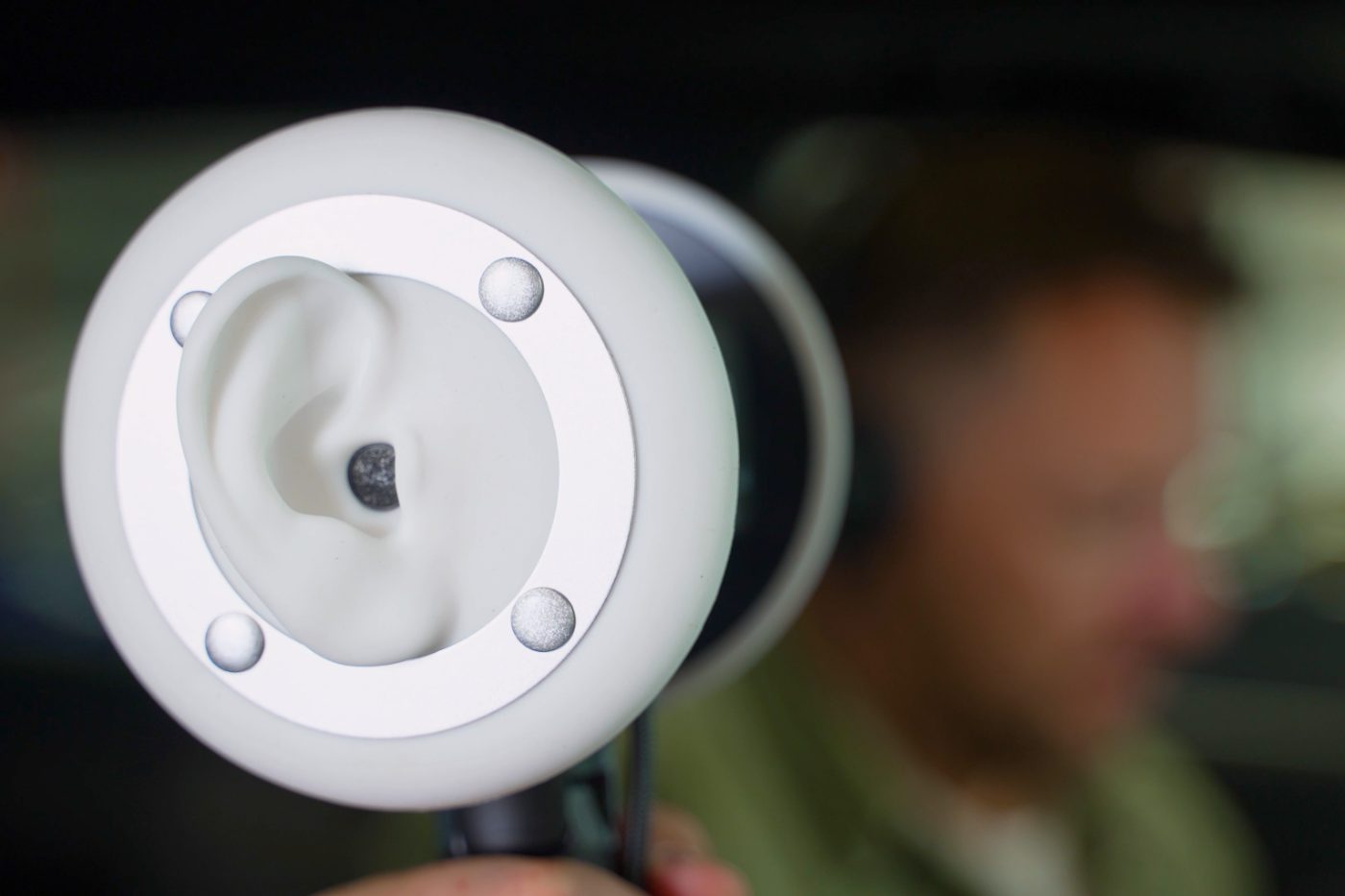
A hand moves aside to show a woman listening on an earbud
Binaural audio.
Step inside it.
Sound recorded in 3D, so it moves around the listener
just like it does in real life. Headphones on.
Services
-
Cinematic sound for your brand.
Don’t just hear the story.
Step inside it.Recorded in 3D by people who know what a room should feel like. Cinematic sound that puts the listener inside the story.
Read more about binaural audio →71%
of podcast listeners mostly listen on headphones
University of York and BBC R&D, 2023
36%
stronger long term memory encoding for 3D audio ads than stereo
Neuro-Insight for Sky Sports and DAX, 2018
Binaural audio process
- Step 01
Design the scene
We map where every sound sits around the listener.
- Step 02
Record and mix in 3D
Spatial recording and sound design that moves like real life.
- Step 03
Release
Mastered for headphones, ready for streaming, podcasts and social.
Binaural audio projects
- Step 01




In depth
Binaural audio, in practice.
Binaural audio is sound recorded or mixed in three dimensions so that, on headphones, it appears to come from all around the listener: in front, behind, above, close to the ear. It is often called 3D audio or spatial audio. It needs no special equipment to hear, just a normal pair of headphones, which is why it works across streaming, podcasts and social.
In a University of York and BBC R&D study, seven in ten podcast listeners said they mostly listen on headphones. That is a private, close up, undistracted listen. Binaural audio uses that space. A wave breaks behind you, a car passes on your left, someone leans in to speak near your ear.
The effect is not just a trick. Neuro-Insight research for Sky Sports and DAX found 3D audio ads produced 36 percent stronger long term memory encoding than the same ads in stereo.
We design the scene first, mapping where every sound sits around the listener, then record and mix in 3D, and master for headphones so it holds up on everything from studio cans to the earbuds that came with a phone.
Questions
Got questions?
We’ve got answers.
The questions brands and agencies ask us most about binaural audio. If yours is not here, ask us directly.
Talk to us about binaural audio →What is binaural audio?
Binaural audio is sound captured or mixed to reproduce how two human ears hear the world, so on headphones sounds appear to come from specific points around you: left, right, in front, behind, above. It creates a strong sense of being inside a place rather than listening to a recording of it.
What is the difference between binaural, 3D and spatial audio?
They overlap. Binaural is the technique: a two channel mix built for headphones that places sound around the listener. 3D audio and spatial audio are broader terms for any sound with height and depth, including speaker formats like Dolby Atmos. For advertising on headphones, binaural is the practical format because it needs nothing but a normal pair of headphones.
Do listeners need special headphones for binaural audio?
No. Any stereo headphones or earbuds work, including the ones that come with a phone. Binaural audio does not work the same way over loudspeakers, which is why we deliver a standard stereo version for radio and speakers alongside the binaural mix for headphones.
Where does binaural audio advertising work best?
Podcasts and music streaming, where most people are on headphones, and social video watched with the sound on. It suits tourism and place, automotive, entertainment and film, wellbeing and any brand that wants listeners to feel something rather than be told it.
Does 3D audio actually improve ad performance?
Research by Neuro-Insight for Sky Sports and DAX measured 36 percent stronger long term memory encoding for 3D audio ads compared with the same ads in stereo. Our own binaural work for Destination NSW and Tourism Tasmania has been chosen specifically because of how strongly listeners respond to being placed inside the scene.
How is a binaural ad produced?
We start with scene design, deciding where every sound and voice sits around the listener and how it moves. We then record with binaural microphones or build the space with spatial sound design tools, place the voice in 3D, and master for headphones, checking on everything from studio headphones to everyday earbuds.